
From fragmented workflows to a centralized and automated platform
GP Location TP
Business software • UX & UI • Freelance • End-to-end design •
Cross-functional team
Cross-functional team
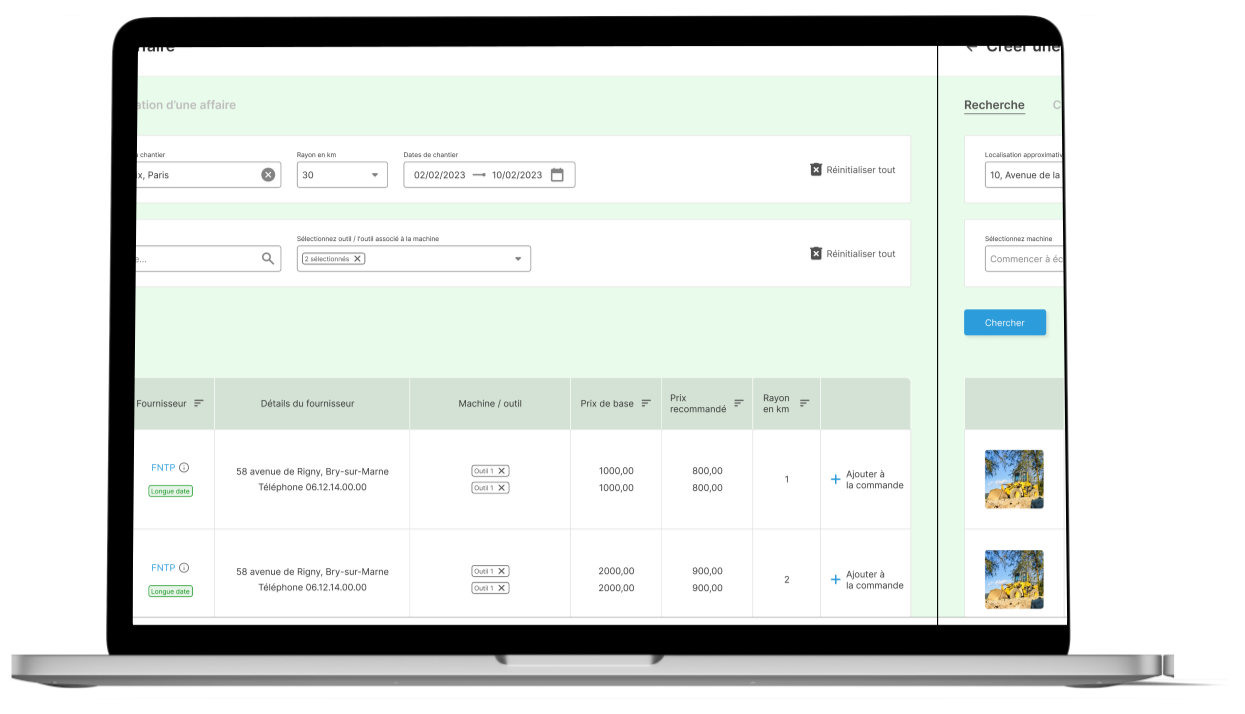
The company relied on existing software solutions that were poorly aligned with its operational needs, resulting in frequent errors and a lengthy, complex onboarding process.
I designed a custom internal business tool from the ground up, translating existing workflows into a coherent product that could be efficiently used in day-to-day operations.
I designed a custom internal business tool from the ground up, translating existing workflows into a coherent product that could be efficiently used in day-to-day operations.

Key Decisions
I centralized and structured payment workflows, as tracking financial operations across multiple stakeholders was complex and difficult to manage.
The new system provides greater visibility into financial flows, making it easier to monitor transactions and identify inconsistencies.
I simplified user journeys and consolidated key functionalities into a single tool, as switching between multiple interfaces made onboarding and daily use unnecessarily complex.
As a result, the system became easier to understand, faster to learn, and more efficient to use.
My Role
Approach
Impact and Results
→ Centralized fragmented processes
→ Replaced two existing tools with a single platform
→ Automated manual workflows
→ Reduced operational errors
→ Reduced training time through a more intuitive user experience
I centralized and structured payment workflows, as tracking financial operations across multiple stakeholders was complex and difficult to manage.
The new system provides greater visibility into financial flows, making it easier to monitor transactions and identify inconsistencies.
I simplified user journeys and consolidated key functionalities into a single tool, as switching between multiple interfaces made onboarding and daily use unnecessarily complex.
As a result, the system became easier to understand, faster to learn, and more efficient to use.
My Role
- Understanding and structuring business requirements
- Translating complex processes into product solutions
- Co-designing with the client, validating with users, and iterating with the developer
Approach
- Analysis of existing tools and business workflows
- User interviews and workflow observation
- Requirements definition and prioritization
- Design, iteration, and continuous validation
Impact and Results
→ Centralized fragmented processes
→ Replaced two existing tools with a single platform
→ Automated manual workflows
→ Reduced operational errors
→ Reduced training time through a more intuitive user experience
From assumptions to a clear understanding of real user needs and product priorities
Sourcin (LEx)
E-learning • UX & UI • Team project • AI-supported workflow •
Cross-functional team
Cross-functional team
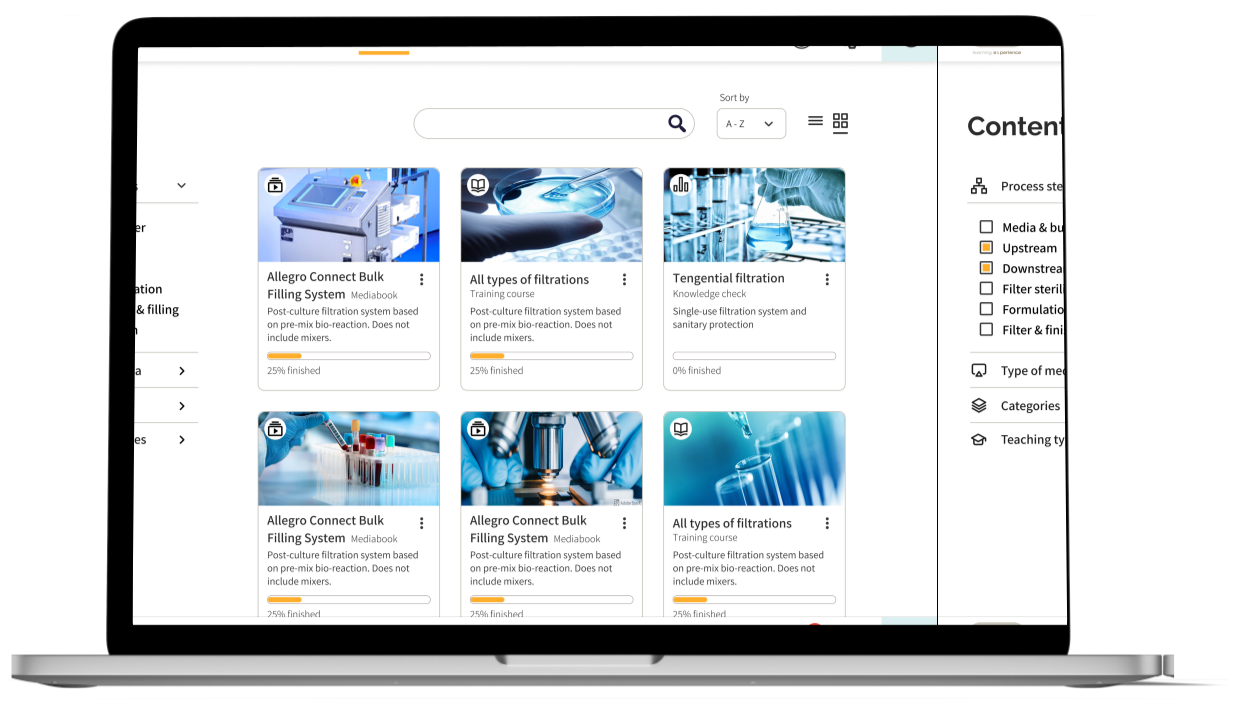
Access to real users was the biggest challenge. Hotjar helped us validate friction points and understand actual behaviour. By expanding the panel to potential biotech users, we clarified real use cases and grounded product decisions in evidence.
In this project, we applied the Double Diamond methodology, which allowed us to structure the process into two main phases: exploration and definition, followed by prototyping and testing.
In this project, we applied the Double Diamond methodology, which allowed us to structure the process into two main phases: exploration and definition, followed by prototyping and testing.
Key Decisions
I introduced the use of behavioral analytics (Hotjar) and expanded research beyond existing users to include potential users, as many product decisions were based on internal assumptions. This helped uncover actual usage patterns and prioritize improvements with greater confidence.
I contributed to restructuring the information architecture, as the existing navigation did not reflect how users actually interacted with the platform. As a result, users can now access learning content and key journeys more easily.
My Role
Approach
Validation
The prototype was tested with:
Impact and Results
→ Identified key navigation friction points
→ Improved understanding of actual platform usage patterns
→ Prioritized improvements based on behavioral data
→ Simplified access to learning content and user journeys
→ Better aligned product decisions with user needs
I introduced the use of behavioral analytics (Hotjar) and expanded research beyond existing users to include potential users, as many product decisions were based on internal assumptions. This helped uncover actual usage patterns and prioritize improvements with greater confidence.
I contributed to restructuring the information architecture, as the existing navigation did not reflect how users actually interacted with the platform. As a result, users can now access learning content and key journeys more easily.
My Role
- User Research & Insight Synthesis
- Turning User Insights into Product Improvements
- Design Iteration & User Validation
Approach
- Observation and analysis of the current system: Stakeholder interviews, vision workshop, benchmarking, documentary and scientific research, ergonomic audit and mapping, eco-design evaluation
- Synthesis and needs expression: Quantitative Survey and Proto-Personas, user Interviews and Personas, usage Observation (Hotjar), customer Journey Mapping
- Ideation and Prototyping: Ideation through mind mapping and card sorting; low-fidelity wireframes, interactive prototype (Figma)
- User Testing.
Validation
The prototype was tested with:
- 8 regular users without specific expertise in biopharma – two tasks and two 5-second tests
- 5 professionals from the biopharma field – three scenario-based tasks
Impact and Results
→ Identified key navigation friction points
→ Improved understanding of actual platform usage patterns
→ Prioritized improvements based on behavioral data
→ Simplified access to learning content and user journeys
→ Better aligned product decisions with user needs
From a customer request to a product feature that delivers real value
AnyCommerce
Stock Transfer • UX & UI • End-to-end design • Cross-functional team

Customers needed a better way to manage inventory and transfer stock between stores.
At the time, this need had not yet been translated into a clear product feature.
I helped turn it into a practical solution integrated into the existing product.
At the time, this need had not yet been translated into a clear product feature.
I helped turn it into a practical solution integrated into the existing product.
Key Decisions
I helped translate a customer need into a concrete product feature.
The feature was designed around real customer workflows and integrated into the existing product.
Using an iterative Lean UX approach, we delivered a first usable version quickly and improved it through feedback and subsequent iterations.
My Role
Approach
Impact and Results
→ Turned a real customer need into a structured product feature
→ Improved inventory management and stock visibility
→ Simplified stock transfers between stores
→ Delivered value quickly through an iterative approach
→ Contributed to a product better aligned with customer needs
I helped translate a customer need into a concrete product feature.
The feature was designed around real customer workflows and integrated into the existing product.
Using an iterative Lean UX approach, we delivered a first usable version quickly and improved it through feedback and subsequent iterations.
My Role
- Understanding customer needs and translating them into product features
- Structuring user flows and interactions
- Designing and iterating interfaces
- Collaborating closely with the developer in a fast-paced delivery environment
Approach
- Starting from a real customer need and clarifying it before designing solutions
- Structuring user flows to simplify key actions
- Using rapid iterations to deliver practical solutions quickly (Lean UX)
- Testing early and continuously refining the solution
Impact and Results
→ Turned a real customer need into a structured product feature
→ Improved inventory management and stock visibility
→ Simplified stock transfers between stores
→ Delivered value quickly through an iterative approach
→ Contributed to a product better aligned with customer needs
From complex business requirements to product features aligned with operational realities
AnyCommerce for Chronopost
POS & Back Office • Touchscreen-optimized interface • UX & UI • Team design • Cross-functional team
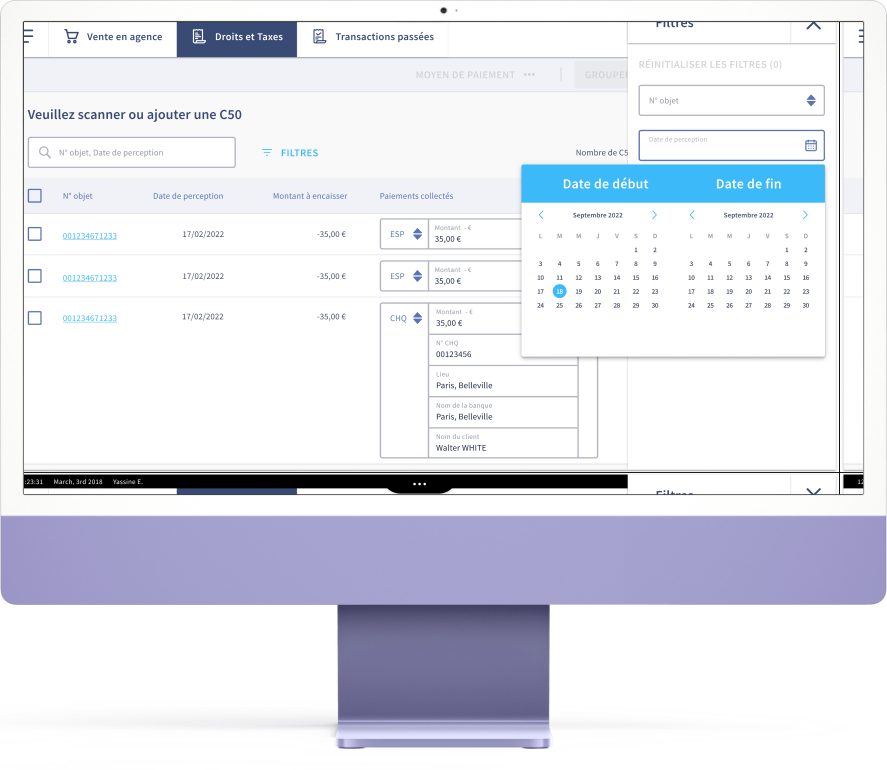
The product had to fit a specific operational environment, with workflows shaped by real-world constraints. It was also designed for touchscreen use in daily operations.
The client's needs were complex and not always easy to translate into product features.
I helped structure these requirements and turn them into clear, practical features within the existing product.
The client's needs were complex and not always easy to translate into product features.
I helped structure these requirements and turn them into clear, practical features within the existing product.
Objectives
The mission was to adapt the omnichannel platform AnyCommerce to meet the specific needs of Chronopost. In addition to standard Point of Sale (POS) and back-office features, the platform had to be tailored to the business processes defined by the client.
Impact and Results
In collaboration with the team, ergonomic solutions were designed and adjusted through regular presentations to the client, ensuring better alignment between the developed interfaces and operational expectations.
The mission was to adapt the omnichannel platform AnyCommerce to meet the specific needs of Chronopost. In addition to standard Point of Sale (POS) and back-office features, the platform had to be tailored to the business processes defined by the client.
Impact and Results
In collaboration with the team, ergonomic solutions were designed and adjusted through regular presentations to the client, ensuring better alignment between the developed interfaces and operational expectations.
- In this project, the adopted methodology was centered on the specifications provided by the Product Owner (PO), who gathered requirements from the end client. My role involved:
- Collaborating closely with the PO to understand functional requirements and translate them into effective UX & UI solutions.
- Designing user interfaces while respecting defined constraints and objectives.
- Participating in regular sessions with the client to present proposals and incorporate their feedback into subsequent iterations.
- Ensuring consistency between client expectations and technical feasibility within the team.
Project Workflow
- Client Needs
- PO Specifications
- UX & UI: Design, Demonstration and Feedback, Validation with the Client, Final Design